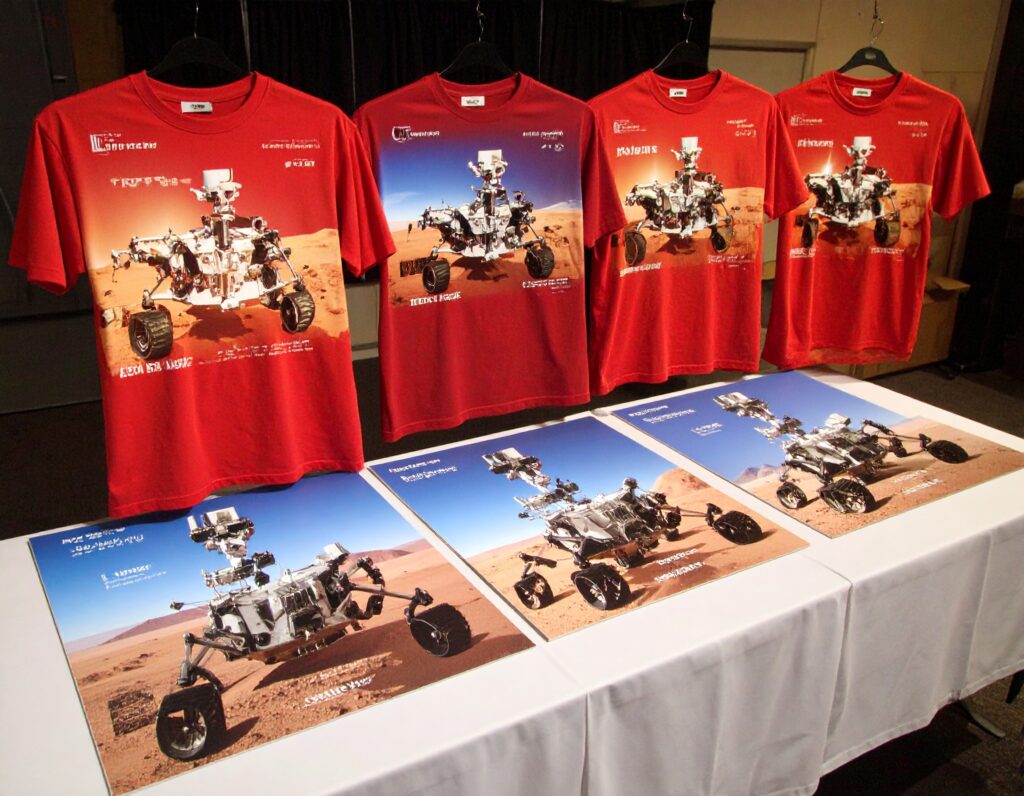
Welcome to Marsmania, where exploration meets wonder. Mars, the red planet, has captivated human imagination for centuries. With its rugged landscapes and intriguing features, it’s a place that promises adventure.
Unlock Fun Facts About Mars
Did you know Mars has the largest dust storms in the solar system? Or that it has two moons named Phobos and Deimos? With our fun-fact accordion, you can uncover quirky and fascinating details about the planet that will ignite your curiosity and inspire your own explorations!
Fun Facts
Explore amazing trivia about Mars and ignite your curiosity.
A day on Mars, known as a sol, lasts about 24 hours and 37 minutes. It’s surprisingly close to an Earth day, making it easier to imagine spending time there!
Yes! Mars has ice at its poles and possibly liquid water beneath its surface. This makes it a fascinating place for scientists studying the potential for life.
Yes, there have been successful Mars landings, starting with the Soviet Union’s Mars 3 in 1971, followed by NASA’s Viking 1 and 2 in 1976, and more recent missions like Perseverance in 2021.
No specific date is confirmed for the next landing, but NASA and ESA are planning the Mars Sample Return mission, with a potential launch in the late 2020s, though exact timelines are subject to change.
Olympus Mons is the tallest volcano on Mars, standing about 13.6 miles high. It’s nearly three times the height of Mount Everest, making it a colossal sight!
While Mars is inhospitable today, evidence suggests it may have supported microbial life in the past. Researchers are exploring its ancient landscapes for clues.
The distance varies as both planets orbit the Sun, ranging from about 54.6 million km at its closest to 401.4 million km at its farthest, with an average of around 78.34 million km when Mars is at opposition.
Current Mars missions use solar power via solar panels (e.g., Perseverance and Curiosity rovers) or radioisotope thermoelectric generators (RTGs). Future human missions may explore fission surface power systems.
Yes, Mars has resources like water ice (especially in polar regions and subsurface), carbon dioxide in the atmosphere, and various minerals, which could support future exploration or habitation.
Communication is achieved using orbiting spacecraft as relays (e.g., Mars Reconnaissance Orbiter) that receive UHF signals from landers/rovers and transmit data to Earth via X or Ka band frequencies, with a delay of up to 20 minutes due to the distance.
Yes, Mars has weather! It experiences dust storms and temperature fluctuations. Occasionally, there even may be snowfall, but it’s mostly in the form of carbon dioxide frost.
Mars has seasons similar to Earth’s, caused by its axial tilt. They last about twice as long since a Martian year is nearly twice as long as an Earth year.
Explore Our Mars Essentials
Discover unique products inspired by the spirit of Mars.
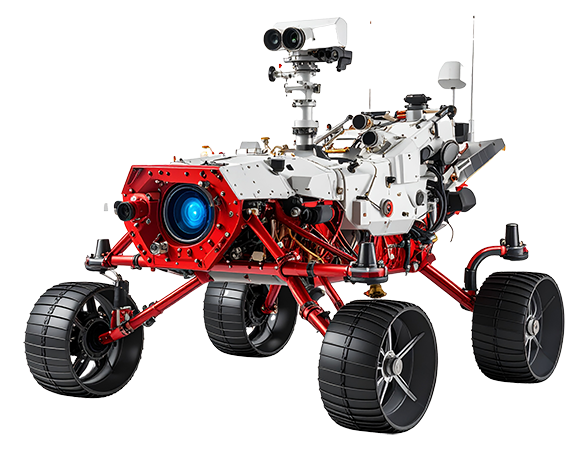
Mars Rover Model
22$
Martian Mug
22$
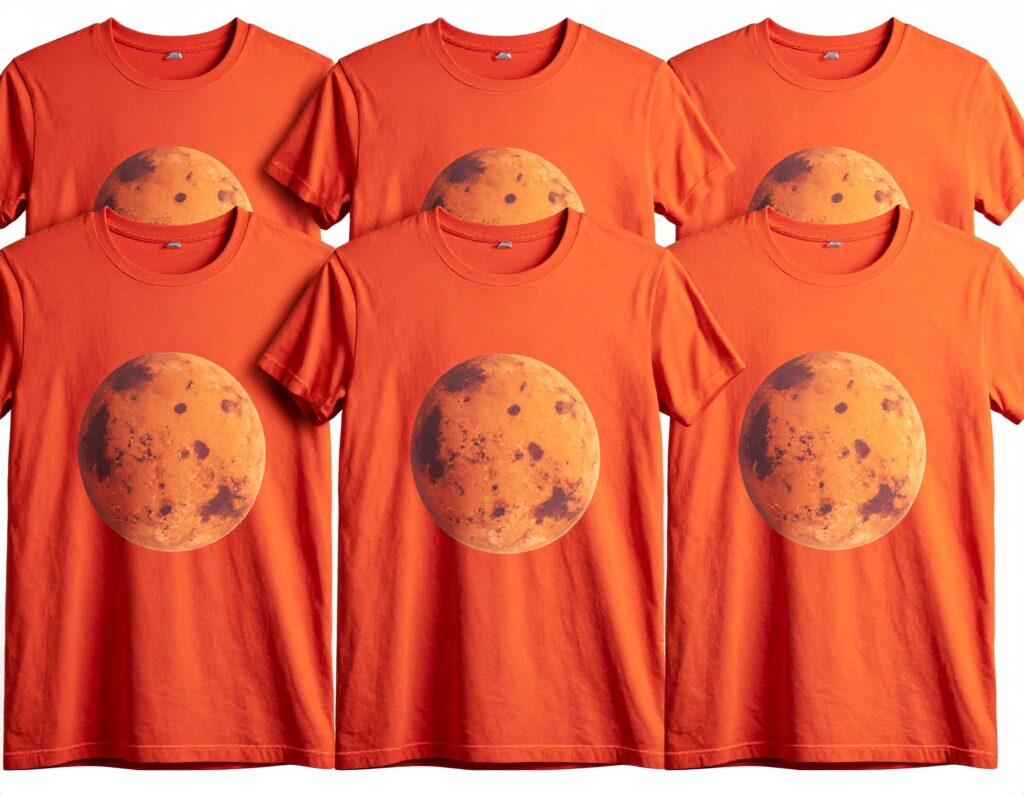
Space Suit Shirt
22$
Alien Plush Toy
22$
What Our Customers Say
Celebrating David's 30th at Marsmania was unforgettable! Our interactive workshop sparked creativity like no other. Highly recommend!
Our time at Marsmania was magical! The birthday surprise for David turned into a stunning memory we both will cherish. Best choice ever!
Join the Marsmania Adventure Today!
Explore thrilling Mars-themed products that ignite your curiosity and passion for space.